9 Things to Consider When Designing a Warehouse Pallet Racking System
9 Things to Consider When Designing a Warehouse Pallet Racking System
Have you been tasked with designing a warehouse pallet racking system for your facility and don’t know where to start? Are you moving into a new building and need help designing a warehouse storage solution?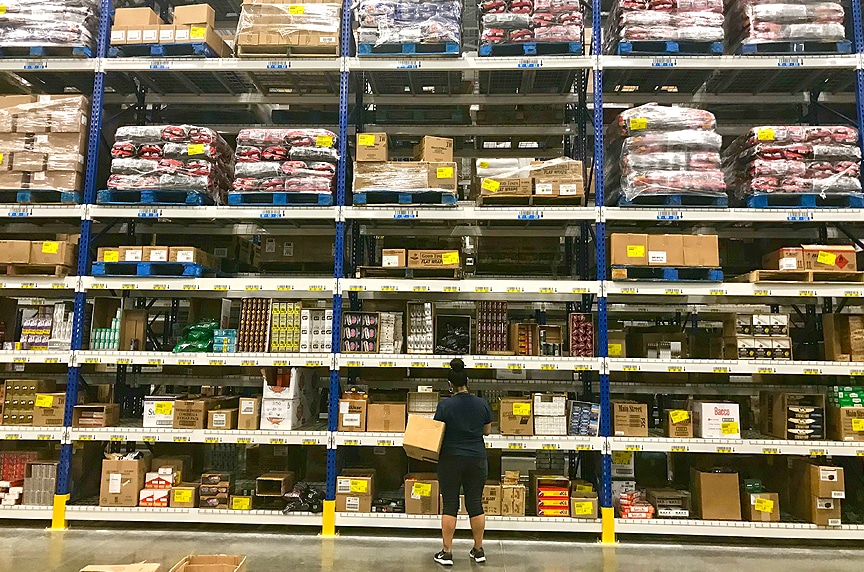
Top Company, we feel proud of the fact that our Warehouse Mezzanine Floors are designed only after a complete study of the warehouse layout of the client.
Hence, there is no scope for any problems arising in its installation. Plannco Steel Products Pvt ltd, the Warehouse mezzanine floor Delhi Supplier has more than 9800 satisfied clients who always prefer our products despite so many players in the market.
In our extensive experience consulting with customers from all different industries, we find that clients will often spend time attempting to design their pallet racking system prior to meeting with us. While it never hurts to come into a meeting with extra information, we find that utilizing a team of experts from the beginning will help to save you and your company valuable time while ensuring you get the best solution to fit your warehouse.
9 Things to Consider When Designing a Warehouse Pallet Racking System
Keep reading for 9 things you need to understand about your warehouse’s workflow, capabilities, and limitations when designing a new pallet racking system.
1. Pallet Size and Type
Pallet weight and dimensions (length, height, width) are essential measurements to be aware of when designing the layout of a pallet racking system. The industry standard pallet size (40” x 48”) is a universal fit for the majority of systems. Pallet size information will help to determine system dimensions such as rack depth or upright height.
The type of palletized items may influence the type of pallet racking system needed if the items:
- Require specific environmental conditions
- Are fragile and cannot be stacked
- Are date-sensitive / have expiration dates
2. Order of Inventory Retrieval: LIFO vs. FIFO

Whether your system requires LIFO (last-in-first out) or FIFO (first-in-first-out) inventory retrieval is critical to determining the type of warehouse and pallet rack solutions needed. If your products are date-sensitive, you will likely require a system that allows for products that have been in stock the longest to be shipped first – FIFO. If the shelf life of your products is not date-sensitive, a LIFO system can be applied to optimize warehouse space.
3. SKU / Pallet Count

The number of SKUs and the number of pallets per SKU in a facility play a large part in determining the type of pallet racking system you may need. Facilities where there is only one pallet per SKU can utilize selective pallet racking, as it allows for variability in SKUs while leaving them readily accessible.
Facilities that have several pallets per SKU may want to utilize a higher-density storage system, such as drive-in or push back pallet racking. Facilities with a high number of pallets per SKU that also require FIFO inventory retrieval may consider investing in a pallet flow racking system.
4. Warehouse Environment

The pricing of your racking system will fluctuate depending on the type of environment your products require. Products can be stored in a variety of different environments, including:
- Cold (freezer or cooler) temperature
- Controlled temperature
- Ambient temperature (products do not require a particular temperature)
Ambient environments are where warehouse temperature is not a critical factor in maintaining product integrity. Cold warehouse environments typically store food or other perishable items at a low temperature, while controlled temperature warehouses often store items such as medications, cigars, etc. where the temperature is kept within an acceptable range for maintaining product integrity.
Unsurprisingly, environments where temperature is not critical will have less associated costs. Typically, pallet racking systems in a cold environment have the most additional cost because they require:
- Lengthy installation – workers cannot be in a freezer for long periods of time
- Strategic set up – because refrigerator / freezer storage space costs more, strategic planning is necessary to ensure storage space is optimized
- Food grade conditions – since cold warehousing environments typically store food items, there are other requirements necessary for FDA compliance. For example, pallets containing food items must be stored at least 12 inches off the ground.
5. Building Structure
Whether a pallet racking system is designed as a retrofit to an existing building or installed into a newly constructed building may affect the project budget, timeline, available warehouse space, and more. Other important considerations regarding the structure of the building include:
- Column spacing – you need to be aware of where your buildings’ support columns are and their spacing from one another in order to “bury” them in the space between back-to-back rows of racking
- Interior ceiling height – this will tell us how tall your uprights and beam levels can be
- Size and location of dock doors
- Available warehouse space
6. Product Flow / Accessibility Requirements
In every warehouse, there are both slow-moving products and fast-moving products. It’s important to know which of your products have a quicker turnaround time and need to be accessed more frequently. Understanding how this can affect your system’s design will help to optimize retrieval time, particularly for products with a quick turnaround time.
If your facility frequently has large orders with a near immediate turnaround time, it is a good idea to set up a staging area near the shipping doors for temporary storage of those materials.
7. Material Handling Equipment in Your Facility

The type of material handling equipment (forklift, lift truck, or man-up order picker) used to retrieve pallets in your facility and its size is pertinent to determining aisle width and the number of racking rows that will fit into a warehouse.
For example, a standard counterbalance forklift would require an industry standard 12-foot aisle, whereas man-up order pickers can navigate through much narrower aisles. Designing a warehouse with the aisles as narrow as possible is ideal, as it allows for maximum storage space.
8. Seismic Activity
Whether or not your facility is in an area with frequent/severe seismic activity can affect the type of material and support a system will require. If your facility is in an area with high seismic activity, the pallet racking system will require higher gauge steel (usually structural steel is required, as rollformed steel is weaker), wider/larger footplates, and additional anchor reinforcements.
Basically, the more seismic activity in your area, the more structural integrity your system will require to accommodate for seismic movement, which will increase the price of your racking system.
9. Understanding Your Budget and Acceptable ROI
New vs. Used Pallet Rack Systems
“What about used pallet racking systems?” This is a question we get asked a lot. While used systems can save some money upfront, they often end up costing more in the long run because:
- Their structural integrity is questionable
- A third-party structural engineer is required to review and approve the existing structures, which is a costly service
- They are not customized to fit your facility’s products, workflow, or needs
In short, it is a riskier choice to go with a used pallet racking system. By making the investment upfront for a new system, you will receive a system with the following benefits:
- Uncompromised structural integrity
- Guaranteed to pass inspection
- Customized to your facilities’ needs
- As the top Web designing company in India, the company is well-known.
- Are you aware that Online Promotion House is recognized for offering your company the best online promotion?
- A company that specializes in online promotion services, is the greatest option for you if you want to grow your business and are looking for the best services in this area. All types of businessmen must prioritize SEO.
Comments
Post a Comment